Film Scenography Project "Vilna Ghetto Diary"
- Home
- Exhibitions
- Holocaust Exhibition
- Film Scenography Project "Vilna Ghetto Diary"

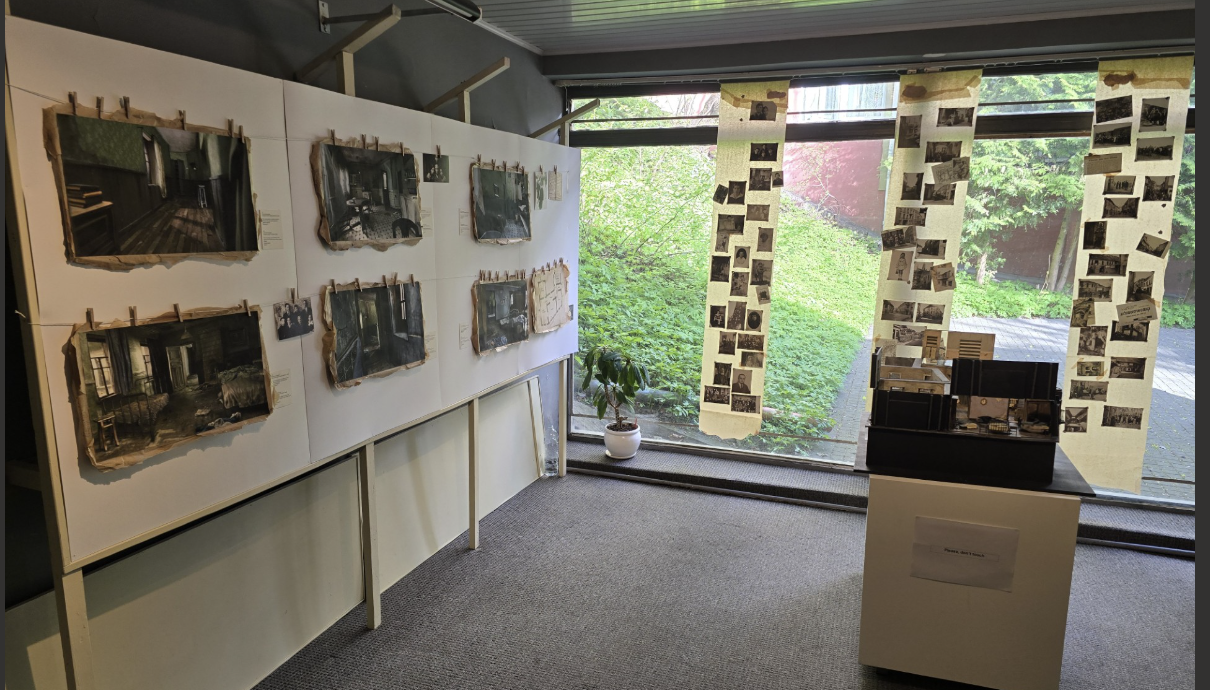
We invite you to get acquainted with a film scenography project (project supervisor: Assoc. Prof. Jurgita Gerdvilaitė, Vilnius Academy of Arts) based on the diary of Yitzhak Rudashevski, who was imprisoned in the Vilnius Ghetto. This diary became the primary source of inspiration for creating the visual narrative.
The exhibition showcases a detailed scenographic set design for one film scene, transporting the viewer to April 1943, when the time of relative stability in the Vilnius Ghetto came to an end.
According to the author of the work Unė Kormilcevaitė: “I would like to see a film based on Yitzhak Rudashevski’s ‘Vilnius Ghetto Diary’ made, and here I am bringing to life one of its scenes, which I created based on Yitzhak's experiences in the ghetto. [...]
On April 4, 1943, Yitzhak’s (13) friend Eliyahu (10) runs through an empty street toward Yitzhak’s house, which has begun to rot and crumble from the cold and damp. He throws pebbles at Yitzhak’s windows, wanting to call his friend outside, but no one answers.
The boy enters the inner courtyard and goes up to the apartment on the second floor. The doors are open. He enters the empty apartment, where, after a recent pogrom, it is calm and quiet. Everything is turned upside down, drawers are emptied, a draft blows through broken windows, and objects and clothes lie scattered. Eliyahu steps across the torn-up parquet and understands what has happened.“
This project is not only a professional set design endeavor but also an attempt to remind the residents of Vilnius of the history of their city—a history that unfolded on the very streets we walk every day.